Skip to content
Finding a topical pain-relief product that is effective, convenient and easy to apply can make a big difference in an everyday routine. Many traditional creams, ointments and gels require you to squeeze out a portion, spread it over the affected area with your fingers and then wash your hands afterward.
Roll On Relief takes a different approach.
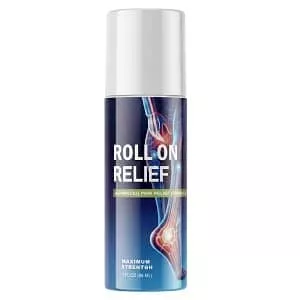
This 3 fl oz maximum-strength topical analgesic uses a rolling-ball applicator designed to make application easier and more targeted. Instead of putting the product directly onto your hands, you roll it onto the area where relief is needed. According to the product information, the formula contains 160 mg of active ingredients per serving, with the amounts clearly disclosed rather than hidden inside a proprietary blend.
That combination of a targeted applicator and fully disclosed active ingredients is one of the most appealing aspects of this product.
Roll On Relief is intended for the temporary relief of aches and pains of muscles and joints associated with arthritis, backache, strains and sprains. It is an external analgesic, meaning nothing needs to be swallowed.
For shoppers looking for convenient topical pain relief without NSAIDs, Roll On Relief is an option worth considering.
Table of Contents
What Is Roll On Relief?
Roll On Relief is a 3 fl oz topical analgesic formulated for external use. Its stated purpose is to provide temporary relief from muscle and joint aches and pains.
The product contains three active ingredients:
- Camphor – 80 mg
- Menthol – 50 mg
- Peppermint oil – 30 mg
Together, these provide 160 mg of active ingredients per serving.
The product page also emphasizes ingredient transparency. Rather than simply describing the product as “extra strength,” the carton lists specific amounts of the active ingredients.
This is particularly useful for consumers who want to know exactly what they are applying to their skin.
Roll On Relief also contains several other ingredients, including aloe vera gel, MCT oil, tea tree oil, sunflower lecithin, DMSO, arnica, turmeric curcumin and ginger oil.
Another notable feature is the rolling-ball applicator. The bottle is approximately four inches long and is designed to make application more targeted, including reaching areas such as the middle of the back.
Why the Roll-On Format Matters
One of the biggest practical advantages of Roll On Relief is its applicator.
With a traditional pain-relief cream, your fingers usually become part of the process. You dispense the cream, rub it into the skin and then wash your hands.
A roll-on design changes that routine.
The rolling ball allows you to apply the product directly to the affected area without putting the formula onto your hands first. This can be particularly convenient when you are applying a topical analgesic several times during the day.
The format also encourages more targeted application.
Instead of spreading a cream over a large area simply because it is already on your hands, you can direct the rolling ball along the specific area where the product is needed.
For consumers who value convenience, this is more than a cosmetic design feature. It can make the product easier to incorporate into a daily routine.
Roll On Relief for Muscle and Joint Aches
Roll On Relief is specifically labeled for the temporary relief of aches and pains of muscles and joints.
This includes discomfort associated with:
- Arthritis
- Backache
- Strains
- Sprains
Because it is formulated as a topical analgesic, it is applied directly to the affected area.
For someone searching for a muscle and joint pain relief roll-on, the format can be especially attractive. There is no need to measure a cream, squeeze out a dose or work the product into your hands before applying it.
The goal is simplicity.
You identify the affected area, roll on the product as directed and continue with your routine.
That straightforward approach may appeal to people who prefer topical products over taking something orally.
Roll On Relief Ingredients
The formula is another major selling point.
The product information clearly identifies the three active ingredients and their quantities. The stated active ingredients are:
Camphor – 80 mg
Camphor is one of the primary active ingredients in Roll On Relief. It accounts for the largest portion of the 160 mg total active ingredients listed per serving.
Menthol – 50 mg
Menthol is another well-known component used in topical analgesic formulations. It is included as one of the three active ingredients in the formula.
Peppermint Oil – 30 mg
Peppermint oil completes the active-ingredient combination.
Together, camphor, menthol and peppermint oil account for the 160 mg of active ingredients per serving advertised for Roll On Relief.
The product page also lists the amounts of the other ingredients, including:
- Aloe vera gel – 380 mg
- MCT oil – 10 mg
- Tea tree oil – 5 mg
- Sunflower lecithin – 1.5 mg
- DMSO – 1 mg
- Arnica, turmeric curcumin and ginger oil – 0.1–0.5 mg each
For shoppers comparing topical analgesics, this level of disclosure can be an important advantage.
No Proprietary Blend
Ingredient transparency is an increasingly important consideration when shopping for health and wellness products.
One feature highlighted by the Roll On Relief product information is the absence of a proprietary blend.
Instead of placing several ingredients under one collective label and leaving consumers guessing about individual amounts, the product page states that nine ingredients are disclosed with numerical amounts, down to 0.1 mg where applicable.
This makes it easier to see what is actually in the formula.
For consumers researching Roll On Relief ingredients, this transparency is one of the strongest reasons to pay attention to the product.
You can review the active ingredients, look at the quantities and compare the formula with your personal preferences before purchasing.
Roll On Relief and Back Pain
Backache is specifically included among the labeled uses for Roll On Relief.
One particularly interesting aspect of the product design is that the bottle is approximately four inches long and the rolling-ball applicator is intended to make reaching the back easier.
This is worth considering because applying topical products to the middle of your back can be awkward.
A conventional cream may require another person’s help or an uncomfortable attempt to twist your arm into position.
The Roll On Relief applicator is designed with this challenge in mind.
That does not make the product a treatment for the underlying cause of back pain. Rather, it is a topical analgesic intended for temporary relief of backache as stated on its Drug Facts information.
Still, the ability to apply a topical product independently can be a meaningful convenience.
Roll On Relief for Arthritis-Related Aches
The labeled uses also include aches and pains of muscles and joints associated with arthritis.
People dealing with recurring joint discomfort often look for practical topical products that can be applied directly to areas of concern.
A roll-on can be especially appealing in this context because the application process is simple and mess-free.
Instead of dispensing cream onto your fingers and rubbing it into the area, the rolling ball provides a more direct method of application.
For someone researching Roll On Relief for arthritis pain, it is important to remember that the product is labeled for temporary relief of associated aches and pains rather than as a treatment intended to address the underlying condition itself.
That distinction makes the product information easier to understand and keeps expectations realistic.
Roll On Relief vs. Traditional Topical Creams
One reason consumers may choose Roll On Relief over another topical analgesic is the application method.
Traditional creams and ointments can certainly be useful, but they have some practical drawbacks. They can leave residue on your fingers, require hand washing and sometimes make precise application more difficult.
Roll On Relief addresses those inconveniences with its rolling-ball applicator.
Easier application
The rolling ball allows the product to be applied directly to the targeted area.
Less mess
There is no need to scoop or squeeze cream onto your hands first.
More targeted
You can guide the applicator over the area where you want to apply the product.
Useful for hard-to-reach areas
The longer bottle design is intended to help with areas such as the back.
For people searching for convenient topical pain relief, these practical advantages may be just as important as the formula itself.
No NSAIDs and Nothing to Swallow
Another feature that may appeal to shoppers is that Roll On Relief is a topical product.
The product information specifically states:
No NSAIDs. Nothing swallowed.
Because it is intended for external application, the product fits into a different category from oral pain-relief products.
For consumers who prefer not to take an oral product for every occasional ache or who specifically want a topical option, this can make Roll On Relief an attractive addition to a home wellness cabinet.
However, consumers should still follow the product’s Drug Facts information carefully and consult a health professional when appropriate.
Made in the USA
The product information also states that Roll On Relief is made in the USA.
For shoppers who consider manufacturing location when purchasing personal-care and wellness products, this may add another positive point to the buying decision.
When combined with the clearly disclosed ingredient quantities and straightforward Drug Facts information, the presentation gives the product a transparent, no-nonsense feel.
How to Use Roll On Relief
According to the provided directions, adults and children over 12 years old should apply the product to the affected area no more than 4 times daily.
Children aged 12 years or younger should consult a doctor.
The application process is designed to be simple: apply the product to the affected area using the rolling-ball applicator.
Because this is an external analgesic, it is important to follow all instructions on the carton rather than assuming that more product will produce better results.
Using the product according to the label is an essential part of responsible topical pain-relief use.
Roll On Relief Safety and Warnings
A major benefit of a detailed product review is that it should not focus only on the positives. Understanding the safety instructions is equally important.
Roll On Relief is labeled:
For external use only.
The product information states that users should avoid contact with the eyes and mucous membranes and should not apply the product to wounds or damaged skin.
It also says not to use the product in combination with other ointments, creams or sprays, and not to use it with a heating pad or heating device.
The product information further instructs users to wash their hands with cool water after each use, despite the roll-on design.
Users should stop use and ask a doctor if the condition worsens or if symptoms persist for more than seven days.
People who are pregnant or breastfeeding are instructed to ask a health professional before use.
The product should be kept out of reach of children. If swallowed, users should seek medical help or contact Poison Control immediately.
There is also a flammability warning. The product should be kept away from excessive heat or open flame and stored in a cool, dry place with the lid tightly closed.
Finally, the product should not be used if the full-body safety seal is broken or missing.
These instructions should be reviewed before the first use.
Who Might Want Roll On Relief?
Based on the product information, Roll On Relief may be appealing to adults looking for a convenient topical analgesic for temporary relief from everyday muscle and joint aches.
It may be particularly interesting to people who:
- Prefer topical products
- Want to avoid swallowing a product for occasional discomfort
- Want a roll-on rather than a cream or ointment
- Deal with occasional backache
- Experience muscle or joint aches associated with arthritis
- Want a product they can apply without getting cream all over their hands
- Appreciate transparent ingredient amounts
- Prefer a compact product that can easily fit into a medicine cabinet or travel bag
The rolling-ball design is arguably the feature that separates Roll On Relief from many conventional topical products.
Why Ingredient Transparency Can Matter
One of the strongest points to consider when evaluating Roll On Relief is the amount of information provided about its formula.
Consumers increasingly want to know what they are buying.
Instead of relying solely on marketing phrases such as “maximum strength” or “extra strength,” Roll On Relief lists specific quantities for its active ingredients.
That means the shopper can see:
80 mg camphor + 50 mg menthol + 30 mg peppermint oil = 160 mg total active ingredients per serving.
This straightforward labeling approach makes the formula easier to understand.
It also gives consumers something concrete to compare when evaluating different topical analgesics.
Is Roll On Relief Worth Buying?
For consumers interested in topical pain relief, Roll On Relief presents a compelling combination of features.
The formula provides 160 mg of disclosed active ingredients per serving, while the rolling-ball design makes application convenient and targeted.
Its intended uses cover temporary relief from muscle and joint aches and pains associated with arthritis, backache, strains and sprains.
The formula is also easy to understand because the active ingredients and their amounts are clearly provided.
Then there is the practical advantage.
The rolling-ball applicator avoids the traditional process of putting topical cream onto your fingers. It can also make it easier to reach areas such as the back without needing assistance.
For shoppers who prioritize convenience, ingredient transparency and a topical format, these features make Roll On Relief an attractive product to consider.
Final Roll On Relief Review
After looking closely at the product information, Roll On Relief stands out primarily because it combines a straightforward topical analgesic formula with an unusually practical application system.
The product offers three clearly disclosed active ingredients—camphor, menthol and peppermint oil—with a stated total of 160 mg of active ingredients per serving.
It is designed to provide temporary relief from aches and pains of muscles and joints associated with arthritis, backache, strains and sprains.
But the biggest differentiator may be the rolling-ball applicator.
For anyone who dislikes getting pain-relief creams on their hands, this design can make the application process considerably more convenient. The longer bottle is also designed to help users reach their backs more easily.
The absence of NSAIDs and the fact that nothing is swallowed may appeal to consumers specifically seeking a topical option.
The product’s full ingredient disclosure is another positive. Rather than hiding ingredients behind a proprietary blend, the formula provides numerical amounts for the listed components.
Of course, responsible use matters. Roll On Relief is for external use only and users should carefully follow the Drug Facts, directions, warnings and storage instructions supplied with the product.
Overall, Roll On Relief is worth considering for anyone searching for a convenient maximum-strength roll-on topical analgesic. Its combination of a targeted applicator, clearly disclosed active ingredients, compact 3 fl oz format and labeled uses for common muscle and joint aches gives it a practical edge over many traditional topical formats.
For shoppers who want a simple way to apply topical pain relief directly where it is needed, Roll On Relief offers a convenient and well-defined option to keep on hand for everyday aches, backache, strains, sprains and arthritis-related discomfort.